
House Cleaning Checklist for Fairfax County Homes: Daily, Weekly, Monthly & Seasonal Tasks
A house cleaning checklist only helps if it tells you how often each job needs doing. Most homes in Fairfax County do well with a short daily reset, one weekly pass through the kitchen, bathrooms and floors, and a monthly list for the spots that get skipped. Add a seasonal pass in spring and fall, and a yearly list for carpets, upholstery and the dryer vent.
Whether you live in a single-family home, a multilevel townhouse or an apartment, you do not have to do everything at once. If your home has fallen behind, start with the daily list and build from there. Most busy households begin exactly there, and there is nothing to feel bad about.
Key Takeaways:
Daily: a 10–15 minute reset keeps dishes, counters, spills and clutter from piling up.
Weekly: bathrooms, kitchen surfaces, floors, dusting, linens and trash get one pass, in a single session or spread across the week.
Monthly: baseboards, vents, window sills, appliance interiors and upholstery get attention a few tasks at a time.
Seasonal and yearly: spring and fall resets, plus carpets, upholstery, curtains and the dryer vent.
Order matters: work top to bottom, dry to wet, and do floors last.
Fairfax County: spring pollen season makes window sills, entry mats and HVAC filters worth extra attention.
Dryer safety: clean the lint filter after every load and the vent pipe at least once a year.
Make it fit: adjust the list for your home type, pets and schedule, and hand off the jobs marked ✔️ if time runs short.
Table of Contents:
Your House Cleaning Schedule at a Glance
What Order Should You Clean In?
Where to Start if Your Home Has Fallen Behind
Daily House Cleaning Checklist
Weekly House Cleaning Checklist
Room-by-Room House Cleaning Checklist
Monthly House Cleaning Checklist
Seasonal and Yearly Cleaning Checklist for Fairfax County
Adjusting the Checklist for Your Home
Cleaning Supplies Checklist
Common House Cleaning Mistakes
How to Build a Routine That Lasts
Do It Yourself or Hand It Off?
Frequently Asked Questions
Your House Cleaning Schedule at a Glance:
How often | What it covers | Effort |
|---|---|---|
Daily | Dishes, counters, spills, clutter, crumbs and pet hair in busy spots | About 10–15 minutes |
Weekly | Bathrooms, kitchen surfaces, dusting, vacuuming, mopping, linens, trash | One session, or spread across the week |
Monthly | Baseboards, vents, window sills, appliance interiors, upholstery, under furniture | A few tasks at a time |
Seasonal | Spring and fall resets: sills, entryways, textiles, HVAC filter | Split across a weekend or two |
Yearly | Carpets and rugs, upholstery, curtains, dryer vent | Often hired out |
Tasks marked ✔️ below are ones many households hand off to a professional.
What Order Should You Clean In?
Work from top to bottom and from dry to wet, and do the floors last. Dust ceiling fans, shelves and vents before you wipe surfaces, so falling dust lands on areas you have not cleaned yet. Do dry jobs, like dusting and vacuuming furniture, before wet ones like scrubbing and mopping. Then finish by working back toward the door, so you never walk across a freshly mopped floor.
Take one room at a time instead of hopping between them. A basket or caddy helps: carry supplies in, and carry things that belong elsewhere out.
Inside each room the same logic applies. Start high (fans, shelves, light fixtures), move to surfaces (tables, counters, sinks), and end at the floor. Let cleaning products sit for the time the label directs before you scrub, and use that waiting time for the next task, such as wiping the mirror while the toilet cleaner works.
Where to Start if Your Home Has Fallen Behind
When everything needs attention, pick a path instead of a pile. First, clear the surfaces: put away loose items and carry laundry and trash out of each room, so you can see what actually needs cleaning. Second, take the two rooms that bother you most, usually the kitchen and the main bathroom, and finish them completely. Third, begin the daily list below, then add one weekly task per day until the full routine fits your schedule.
Expect this to take a couple of weeks, not one weekend. If the buildup is more than you want to take on, a one-time deep clean followed by a lighter routine is a common way to start from a clean baseline.
Daily House Cleaning Checklist
A daily reset keeps everyday mess from becoming a weekend project. Plan on about 10 to 15 minutes, and skip anything that does not apply to your household.
Wash dishes or load the dishwasher, then wipe the sink.
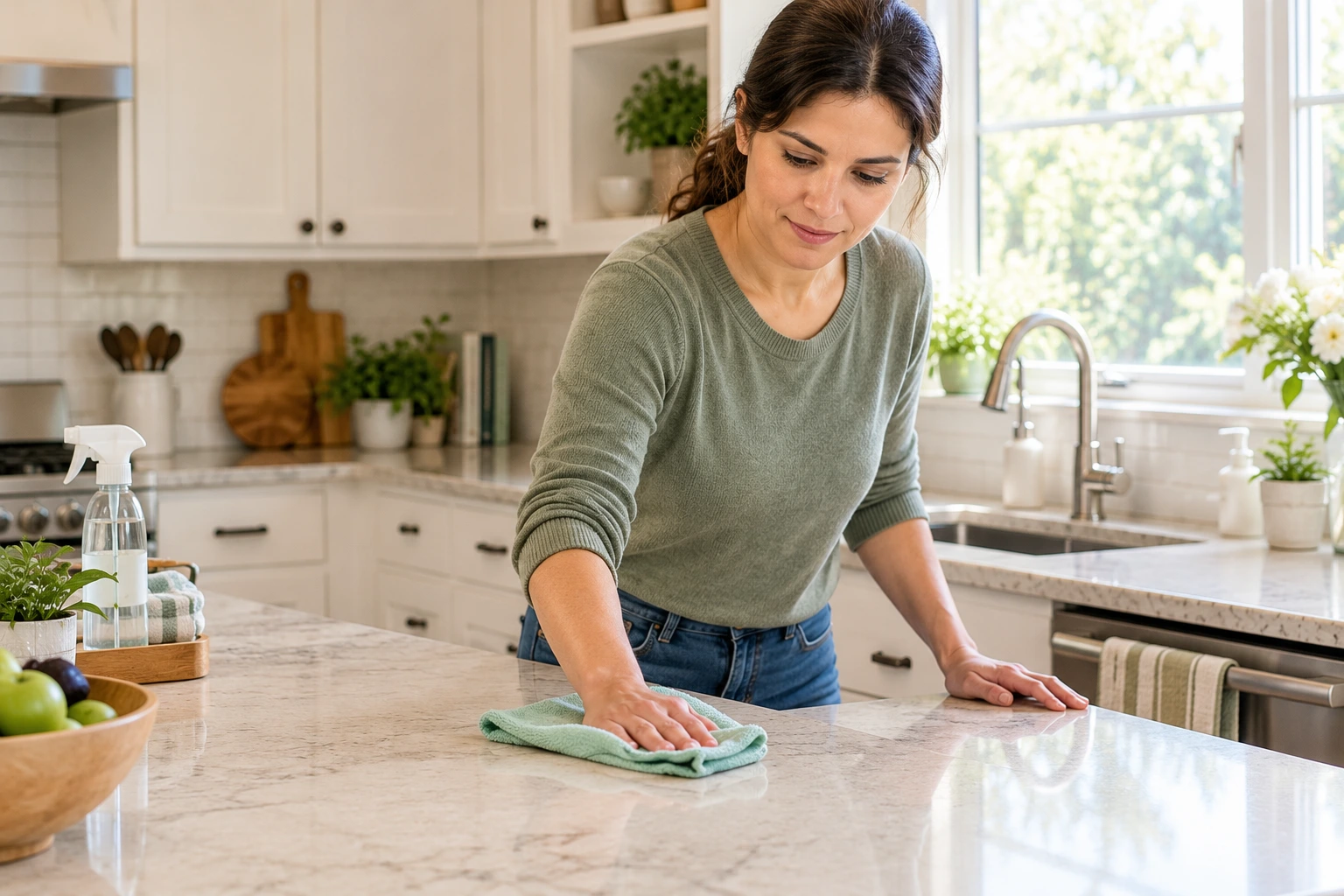
Wipe kitchen counters and the dining table after meals.
Clean up spills and food splashes as they happen.
Put away shoes, bags, toys and clothing.
Clear the entryway and other high-traffic spots.
Spot-vacuum or sweep crumbs, dirt and pet hair where they collect.
Empty bins that are full.
Wipe the bathroom sink and counter.
A helpful habit: do one small task while you are already in the area. Wiping the counter right after cooking keeps it from joining a longer cleanup later.
Weekly House Cleaning Checklist
Weekly cleaning covers the rooms and surfaces that get the most use. Do it in one session or split it up.
Clean toilets, sinks, mirrors and the tub or shower. ✔️
Wipe the stovetop, kitchen sink, backsplash and cabinet fronts where splashes show.
Wipe appliance handles, light switches and door handles.
Dust shelves, tables and other surfaces you can reach.
Vacuum carpets and rugs, and vacuum more often if you have pets.
Sweep and mop hard floors with a product made for your flooring. ✔️
Change bed linens, and wash them in hot water if the fabric allows.
Wash bath towels and mats.
Empty bins and wipe them if needed.
Clean the entryway, stairs and hallways.
Check the refrigerator for spills and expired food.
Experts quoted by NBC News suggest changing sheets weekly, or every two weeks at the very least, and vacuuming rugs weekly, more often with pets.
How to spread weekly chores across the week
Day | Suggested focus |
|---|---|
Monday | Kitchen surfaces and general tidying |
Tuesday | Bathrooms |
Wednesday | Dusting and living areas |
Thursday | Bedrooms and linens |
Friday | Floors and entryways |
Weekend | Catch-up tasks, or a day off |
Change the order to fit your workweek. If you would rather clean once, combine the tasks into a single session.
Room-by-Room House Cleaning Checklist
Kitchen:
Clear and wipe countertops.
Clean the sink and faucet.
Wipe the stovetop, backsplash and cabinet fronts with visible marks.
Wipe the outside of the refrigerator, microwave and dishwasher.
Clean the inside of the microwave.
Toss expired food and wipe up shelf spills.
Wipe the table and chairs.
Sweep, then mop. ✔️
Empty the bin and wipe around it.
Work from the top down: cabinet fronts and backsplash first, then counters and appliances, and the floor last. Cleaning the sink at the end lets you rinse cloths and wipe the fixtures once everything else is done.
Occasional: the insides of the oven and refrigerator, and interior cabinets. ✔️ Follow the manufacturer's instructions, because a weekly wipe will not lift baked-on buildup. Never mix cleaning products, and rinse food surfaces as the label directs.
Bathrooms:
Clear the counter and wipe it down.
Clean the sink, faucet and mirror.
Clean the toilet inside, outside and around the base. ✔️
Scrub the tub or shower, rinse, and remove hair from drains.
Wipe handles, fixtures and switches.
Swap towels and the bath mat.
Empty the bin.
Sweep or vacuum, then mop. ✔️
Spray the toilet, tub and shower first so the cleaner can work while you wipe the mirror, counter and fixtures. Then scrub and rinse those areas, and do the floor last.
Occasional: soak the showerhead every one to three months, depending on how hard your water is, and treat grout and fixture buildup. ✔️ Ventilate the room and follow product labels.
Bedrooms:
Make the bed and change linens on your schedule.
Put away clothes and shoes.
Clear bedside tables and dresser tops.
Dust lamps, headboards and furniture you can reach.
Wipe mirrors.
Vacuum or mop, including under the bed where you can reach.
Empty the bin.
Strip the bed first, so you can dust and vacuum while the laundry runs.
Occasional: wipe baseboards and door frames, and vacuum furniture crevices.
Living Room and Dining Area:
Put away loose items and fold blankets.
Dust tables, shelves and the TV stand.
Wipe coffee, side and dining tables.
Vacuum sofa and chair cushions and crevices.
Remove pet hair from furniture and floors.
Vacuum rugs and carpet.
Sweep or mop hard floors. ✔️
Wipe switches and handles.
Dust before you vacuum, so what falls lands on the floor you are about to clean.
If upholstery has stains or odors that routine vacuuming will not fix, see our upholstery cleaning service.
Entryway, Stairs and Hallways:
Put away shoes and bags.
Shake out or clean floor mats according to their labels.
Sweep or vacuum floors and stairs.
Wipe rails, ledges and door handles.
Check corners for dust.
Busy households may need these spaces cleaned more often than any other. In a townhouse, the stairs alone can account for a good share of the work. Rain, snow and leaf season bring extra dirt in on shoes, so a mat outside, a mat inside and a shoe tray near the door cut down what reaches your floors.
Laundry Area and Home Office:
Clean the dryer's lint filter after every load.
Wipe the machine exteriors, the counter and the washer's door seal.
Dust the desk, shelves and screens with a dry cloth.
Empty bins and put supplies away.
Leave the washer door ajar between loads so the drum can dry, and wipe the door seal where moisture collects. At the desk, unplug devices and use products meant for electronics.
Lint matters beyond tidiness. The National Fire Protection Association (NFPA) lists failure to clean as the leading cause of home dryer fires, and it advises cleaning the vent pipe once a year, or sooner if clothes take longer to dry. Our dryer vent cleaning service covers that job. ✔️
Monthly House Cleaning Checklist:
These jobs do not need weekly attention, but they add up when ignored.
Wipe baseboards and door frames.
Dust vents, ceiling fans and light fixtures you can reach safely.
Clean interior window sills and tracks.
Wipe cabinet fronts and walls where marks collect.
Clean appliance interiors, following the manufacturer's instructions. ✔️
Vacuum upholstery, under cushions and under movable furniture.
Wash throws and removable covers according to their labels.
Empty the vacuum canister and clear hair from the brush roll.
Check guest rooms and other less-used spaces for dust and clutter.
Restock cleaning supplies.
Use a vacuum brush attachment or a damp cloth on vents and fan blades, and turn fans off first. Go by the condition of each room, not the calendar. A busy kitchen may need more, and a guest room may need less.
Seasonal and Yearly Cleaning Checklist for Fairfax County:
Spring:
Pollen season arrives in spring, and Fairfax County's Health Department has pointed to April and May as peak months for Northern Virginia tree pollen. Its allergy-season guidance says to keep windows and doors closed when counts are high, use high-efficiency HVAC filters and change them regularly, and caulk gaps around windows and doors. A cleaning checklist will not treat allergies, but it does clear away the dust and debris that collect indoors.
Dust window sills and ledges, then wipe the tracks.
Shake out or wash entry mats.
Check your HVAC filter and replace it as the manufacturer directs.
Wash curtains, bedding and covers according to their labels.
Clean window screens where appropriate.
Vacuum rugs and wipe door frames.
Look over window and door seals for gaps.
Fall:
Fall is a good time to get ahead of heating season and the holidays. Dryer fires are more likely in fall and winter, according to NFPA, so the vent belongs near the top of the list.
Replace the HVAC filter as the manufacturer directs.
Have the dryer vent cleaned. ✔️
Wash curtains, throws and bedding for the cooler months.
Wipe windows and sills before closing them for the season.
Clear closet clutter, so coats and guest items have room.
Before Guests Arrive:
Clear and wipe the entryway.
Clean the guest bathroom, and set out fresh towels.
Wipe kitchen counters and run the dishwasher.
Dust and vacuum the living area.
Empty every bin.
Make up the guest bed, if someone is staying.
Yearly:
Have carpets and rugs deep cleaned, more often with kids or pets. ✔️
Have sofas and upholstered chairs cleaned. ✔️
Have the dryer vent cleaned. ✔️
Wash or clean curtains and blinds.
Clean behind and under heavy furniture and appliances when it is safe to move them.
Adjusting the Checklist for Your Home:
Single-family homes have more bathrooms, bedrooms and floor area. Split the work by floor, keep a small supply caddy on each level, and set aside time for the rooms that rarely get attention, such as bonus rooms and basements.
Townhouses stack rooms across levels, often with a finished basement. Vacuum from the top floor down, and count bathrooms and stairs when you plan your time. A lightweight vacuum kept on the upper level saves trips up and down.
Apartments and condos are smaller, but oven and refrigerator interiors, window sills and bathroom grout matter more, because there is less space to hide buildup. A short daily reset does a lot of work in a small home.
Homes with pets need high-use floors vacuumed more often, plus regular washing of pet bedding. Pet stains and odors set into carpet or furniture are a job for carpet cleaning and upholstery cleaning, which many pet households pair with regular visits.
Cleaning Supplies Checklist:
All-purpose cleaner for counters, sinks and most hard surfaces
Glass cleaner for mirrors and windows
Microfiber cloths, plus a sponge or scrub brush for tubs and showers
Toilet brush
Vacuum with attachments for edges and upholstery, plus a broom and dustpan
Mop and bucket, with a floor cleaner made for your flooring
Gloves and a caddy to carry it all
Store products in their original containers, out of reach of children and pets.
Common House Cleaning Mistakes:
Cleaning floors first. Dust and crumbs fall as you work, so you end up cleaning the floor twice. Do floors last.
Using one cloth everywhere. A cloth that wiped a toilet or bathroom sink should never touch a kitchen counter. Keep separate cloths, and wash them after use.
Mixing cleaning products. Combining products can release harmful fumes. Use one at a time, rinse between products and keep the room ventilated.
Using the wrong product on a surface. Some cleaners dull or damage hardwood, stone and certain finishes. Read the care instructions and test in a hidden spot first.
Saving everything for Saturday. Five-minute daily tasks keep the weekly list short.
Forgetting the jobs you cannot see. HVAC filters and dryer lint rarely look dirty, but both affect your home's safety and airflow.
How to Build a House Cleaning Routine That Lasts:
Start with the rooms you use most, usually the kitchen, bathrooms, living room and entryway. Keep daily tasks short and separate from bigger jobs like appliance interiors. Spread chores across the week, or pick one weekly session. Adjust for pets, children and guests, and print the list or copy it into a shared note so everyone in the household can tick things off.
A simple starter plan: the daily reset every day, one bathroom clean midweek, one dusting-and-floors pass on the weekend, and one monthly task each week. Review it every few months, because kids, pets and schedules change what your home needs.
Do It Yourself or Hand It Off?
Hiring help makes sense when:
weekly tasks keep getting pushed aside,
buildup is collecting on baseboards, grout and corners,
a deadline, such as guests or a holiday, is coming up,
you want to spend your weekends on something else.
The jobs marked ✔️ above are a natural place to start if you want partial help rather than a full hand-off. A professional recurring visit typically takes about 2 to 5 hours, and a deep clean about 3 to 8 hours, depending on your home's size and condition. In short: recurring cleaning keeps a home on track, and a deep clean resets buildup. Many households start with a deep clean, then switch to recurring visits. If clutter is the real obstacle, our organizing service can help. Moving? See move-in/move-out cleaning.
To decide, add up the time you spend on the weekly list, including setup and cleanup, and compare it with how you would rather spend that time. If you are not sure which service fits, describe your home when you request a quote and we will suggest a plan.
Frequently Asked Questions
1. What should a house cleaning checklist include?
Daily upkeep, weekly chores, monthly tasks and seasonal or yearly jobs, with room-by-room detail for the kitchen, bathrooms, bedrooms, living areas and floors. Each task should come with a frequency, so you know what to do today and what can wait.
2. What order should I clean my house in?
Top to bottom, dry to wet, and floors last. Dust before you wipe, wipe before you mop, and work one room at a time, finishing by backing toward the door so you never step on a clean floor.
3. How often should I change bed linens?
Weekly is a common recommendation, and every two weeks is the minimum suggested by experts quoted by NBC News. Wash them in hot water if the fabric allows, and change pillowcases sooner if you need to.
4. How often should I clean the dryer lint filter and vent?
Clean the lint filter after every load. NFPA advises cleaning the vent pipe once a year, or sooner if clothes take longer than normal to dry. A vent that is not clearing lint can also slow drying and raise your energy use.
5. What is the difference between regular cleaning and deep cleaning?
Regular cleaning maintains commonly used rooms. Deep cleaning goes further into buildup and spots routine cleaning skips, such as baseboards and corners. Scope varies by provider, so confirm what is included.
6. Which spots do people miss most?
Baseboards, door frames, vents, window sills and tracks, cabinet fronts, light switches and the dryer vent. Add them to your monthly list, and check them whenever a room looks dull even after a full clean.
7. How can a busy family keep up?
Keep the daily list short, spread weekly chores across several days, and pick a few monthly tasks at a time. Sharing the list helps, so the work does not fall on one person. If the routine still will not fit, hiring help for the weekly jobs can free the time.
8. How should the checklist change for pets?
Vacuum high-use floors and furniture more often, wash pet bedding regularly, and follow care labels on fabrics and floors. Pet hair settles on sofas, baseboards and low shelves, so add those spots to your weekly pass.
9. What belongs on a spring checklist for Fairfax County homes?
Dust sills and tracks, clean entry mats, wash textiles, check seals and replace the HVAC filter as the manufacturer directs. See the county's allergy-season guidance for current recommendations, since pollen conditions change from year to year.
Need Help Keeping Your Fairfax County Home Clean?
If cleaning is taking time from work or family, you do not have to handle every task yourself. Tidy House Keepers is a family-owned house cleaning company serving Fairfax County since 2022.
Fully licensed, trusted, and insured
All team members undergo background checks
Non-toxic, eco-friendly, pet-safe and child-safe products
100% satisfaction guarantee: notify us within 24 hours for a prompt re-clean
200+ projects completed
Book your cleaning or get a free quote and get $30 off your first cleaning. Call (202) 790-1006.
We serve Fairfax, Fair Oaks, Oakton, Fair Lakes, Centreville, Chantilly, Vienna and Burke.
